
Before Website AI Reception Goes Live, Define These 4 Boundaries: Scope, Human Handoff, Lead Qualification, and Access Control
Adding AI reception to a website is not just dropping in a chat surface. The real quality and risk both depend on whether the boundaries were designed before launch.

When teams start planning website AI reception, they usually focus first on model capability: can it handle multi-turn conversations, answer complex questions, or introduce the offer like a sales rep?
Those questions matter, but they are not usually what determines whether the agent is actually useful, safe, or commercially effective.
What matters more is whether its boundaries were clearly defined before launch.
Without those boundaries, most website agents drift into one of two failure modes:
- they answer too freely and expand risk along with confidence
- they answer too cautiously and become a weaker version of search
That is why website AI reception should not go live before these four boundaries are defined.
1. Answer scope: define what it should answer and what it should not
Many website agents are expected to do too much at once:
- explain the brand
- introduce products or services
- answer implementation questions
- discuss pricing
- estimate delivery timing
- judge whether a lead is a good fit
The problem is that these are not all the same type of task.
A more stable model is to split questions into three layers:
- information it can answer directly from public material
- information it can guide or frame, but not finalize
- information that should always go to a human
For example:
- service scope, typical process, and case-study direction can be answered
- fit assessment and early recommendations can be guided
- pricing, contracts, timelines, customer data, and internal permissions should be handed off
If scope is not defined early, the prompt, knowledge source, and permissions layer all become harder to control.
For a more structured look at how website structure and search entry optimization fit into actual delivery work, the SEO Structure and Search Entry Optimization service track is the closest match.
2. Human handoff is not a failure state. It is part of the experience.
Some teams treat human handoff as a fallback that only matters when the model gets stuck.
A better view is that human handoff is part of the product design from the start.
In real commercial conversations, not every question should stay automated.
The strongest handoff moments often include:
- pricing and budget questions
- delivery timeline and scope questions
- clear high-intent buying signals
- questions outside the public knowledge boundary
- low-confidence situations where the model should not pretend certainty
If the agent keeps pushing through these moments, the result is rarely “more intelligent.” It is usually less trustworthy.
A stronger handoff design should:
- make it obvious when a human will step in
- give the visitor a clear next action
- preserve enough context so the person does not have to start over
Human handoff is not an admission that AI is weak. It is an acknowledgment that business conversations naturally move through different levels of commitment.
3. Lead-qualification scope: it should route people, not interrogate them
The most useful website agents do more than answer questions. They help qualify and route demand earlier.
That means the real value is often not in keeping the conversation going forever, but in helping visitors enter the right path faster.
For example, the agent can help identify:
- which service track is most relevant
- whether the visitor is browsing, comparing, or ready to talk
- whether it should recommend a case study, FAQ, pricing page, or human contact next
But this layer also needs boundaries.
If qualification becomes too aggressive, visitors feel interrogated. If there is no qualification at all, the experience turns into a generic chat layer.
A better approach is to ask only a few high-value questions, such as:
- is the business domestic or global-facing?
- is the current bottleneck website messaging, multilingual communication, or agent integration?
- is the offer complex enough that explanation cost is a real issue?
The point is not to collect as much information as possible. It is to make the next recommendation more accurate and lighter-weight.
4. Permission boundaries: public models should not touch everything
This is one of the easiest areas to underestimate and one of the fastest ways to create real risk.
As soon as teams want the agent to feel “smarter,” the instinct is often to feed it more internal material.
But the better first question is not “what else can we connect?” It is:
- what information is appropriate for public answers?
- what should remain internal-only support material?
- what should never appear anywhere near the public agent flow?
For most website agents, safe knowledge sources usually include:
- published service pages
- FAQ content
- case-study summaries
- public process descriptions
- explicitly approved structured knowledge
The things that should not be opened directly usually include:
- private customer data
- internal pricing rules
- unpublished proposals
- privileged internal systems or workflows
A strong website agent architecture is not about connecting everything. It is about connecting only what is appropriate.
Why many website agents feel conversational but still fail to convert
In practice, many conversational websites do not underperform because the model is weak. They underperform because the product design is still stuck at the “chat demo” stage:
- it can answer, but not route
- it can introduce, but not convert
- it can generate language, but not control risk
- it can extend the conversation, but not move it forward
Without boundaries, an agent becomes a busy-looking feature instead of a useful commercial front desk.
The website agents that actually help conversion usually share a few traits:
- clear answer scope
- natural human takeover
- explicit recommendation paths
- controlled permission boundaries
They may not look like a “do everything” AI. But they behave much more like a system that can support the business.
That is why we increasingly think of the website agent as a digital front desk, not just a plugin that happens to chat.
A quick launch checklist
Before website AI reception goes live, check these four things:
- Which questions can it answer directly, and which ones should only be guided or handed off?
- In which situations should the visitor move to a human with minimal friction?
- Can the agent help route visitors toward the right service path instead of only answering general questions?
- Have the content and interfaces it can access already been filtered by permission level?
If two or more of those questions are still unresolved, it is usually more important to define the product boundary than to keep tuning the prompt.
Closing Thought
The real value of website AI reception is not that the website suddenly looks smarter. It is that the website gains new abilities to explain, route, qualify, and hand off.
And those abilities do not begin with model power. They begin with boundaries.
If the site also needs stronger semantic structure and proof layers before AI reception can perform well, Before AI Recommends Your Website, Check These 4 Citation Conditions is the natural companion read. In many cases, the AI reception problem is still rooted in content clarity.
Insights
Continue Reading
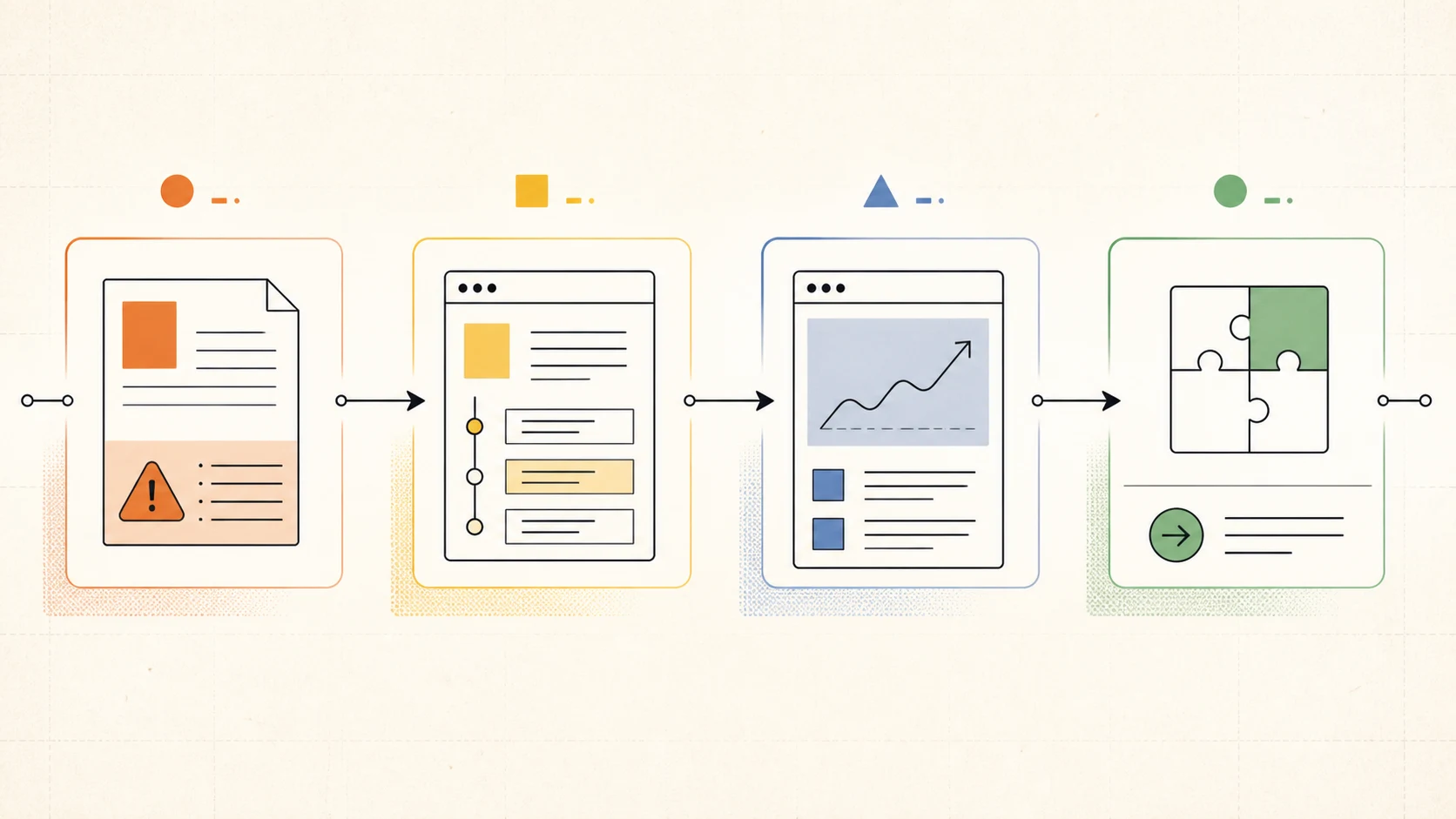
Why B2B Case Studies Fail to Build Trust and the 4 Proof Layers Your Website Needs
A client logo, a project screenshot, and a testimonial do not automatically create trust. A strong case-study page connects the problem, decisions, results, and fit into one credible proof path.

For Multilingual Brand Sites, Translation Is Not the Gap. These 5 Localization Trust Signals Are.
Many bilingual websites do not fail because they lack an English version. They fail because the English version still does not build trust, clarity, or momentum toward contact.