
Why B2B Case Studies Fail to Build Trust and the 4 Proof Layers Your Website Needs
A client logo, a project screenshot, and a testimonial do not automatically create trust. A strong case-study page connects the problem, decisions, results, and fit into one credible proof path.
Many B2B websites have case-study pages. That does not mean those pages are doing the work of building trust.
The page may include client logos, project screenshots, a testimonial, and a long list of deliverables. After reading it, a prospective buyer may still be unable to answer the questions that matter most: What problem did this team actually solve? How did they make decisions? Could the same approach fit my business?
That is why some case-study pages attract traffic but generate few qualified inquiries. They document that a project happened, but they do not help the next buyer make a decision.
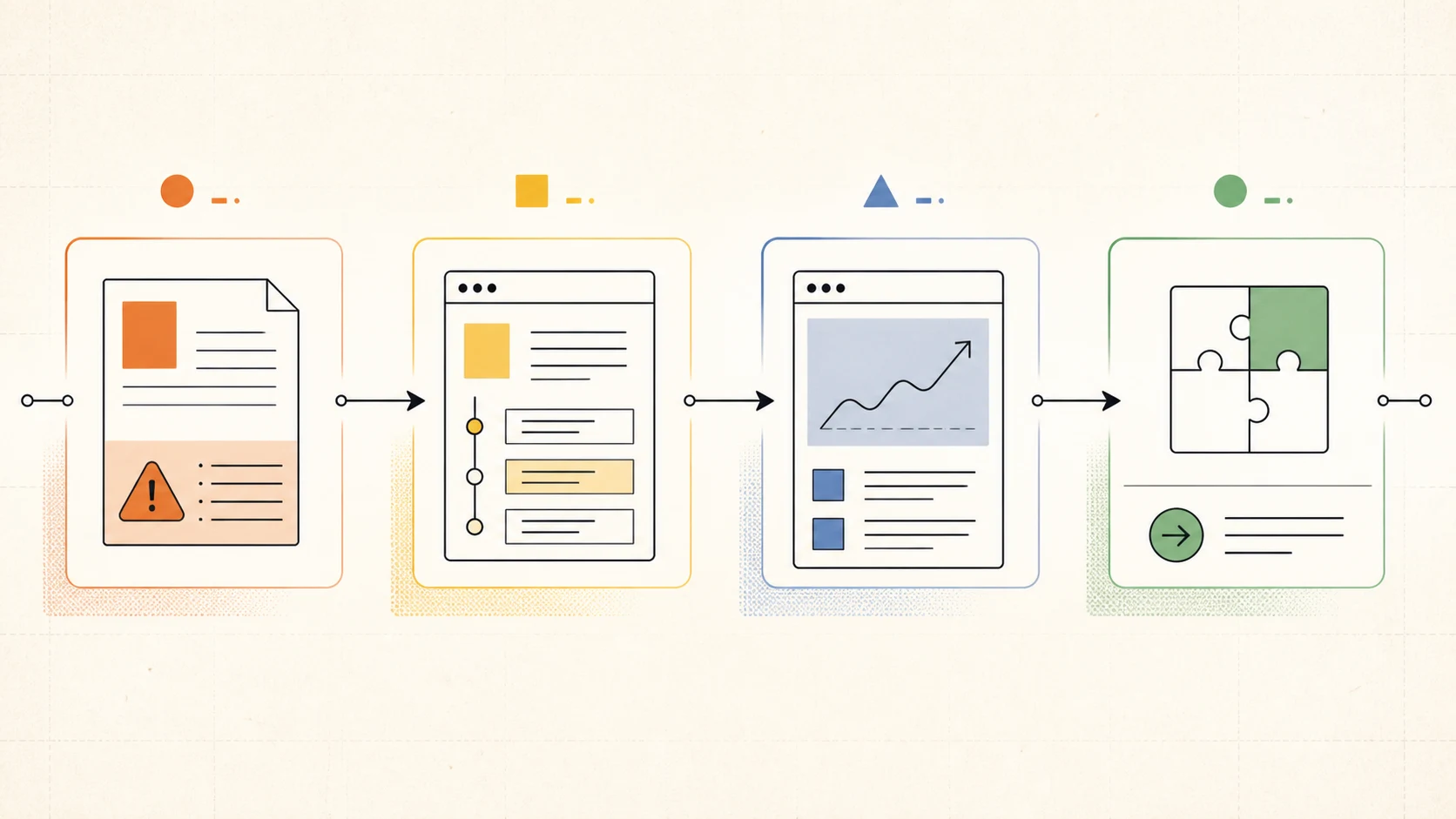
A useful case study is a chain of evidence: from the original problem to the actions taken, from those actions to the result, and from the result to a clear fit judgment. These are the four layers most B2B case-study pages need to strengthen.
1. Start with the client’s situation, not the deliverables
The most common opening sounds like this: “We delivered a new website, brand refresh, or marketing system for a client.”
That tells readers what you shipped. It does not tell them why the project mattered. A prospective buyer needs to understand the situation before the work began:
- What stage of growth was the client in, and who were they trying to reach?
- Where was the existing website, content, or sales process breaking down?
- Why was the previous approach no longer sufficient?
- What time, compliance, technical, or collaboration constraints shaped the work?
This context does not require exposing confidential information, but it does need to be specific enough to be useful. “We improved the client’s brand image” is weak. “International buyers could see the products but could not tell which use case or purchasing path applied to them” gives a reader something to recognize.
A simple test is: if you hide the client logo, can the reader still understand why the project was worth doing? If not, the page is probably still operating at the showcase layer.
Consider adding a short client-context card near the top. It only needs to answer three questions: who the client was, where they were stuck, and what change the project needed to create. Its job is to help readers decide whether the situation resembles their own.
2. Describe decisions and actions, not a delivery checklist
“We completed the homepage, service pages, English version, and SEO setup” is a delivery list. It is not yet persuasive evidence.
Buyers want to know why those actions came first, what trade-offs you made, and which decisions made the outcome more likely.
One useful way to rewrite the project is in three layers:
- Diagnosis: identify the break in clarity, trust, fit, or conversion that mattered most
- Action: reorganize the pages, content, proof, and CTA around that break
- Trade-off: explain what you intentionally did not do yet, and which goal that protected
For example, instead of only saying “we added a case-study page,” explain that the old site contained product specifications but did not help international buyers judge fit. The case studies were therefore rewritten as problem, action, result, and fit conditions, then linked back into the service page and contact path.
This demonstrates judgment rather than busyness. It is also easier for a sales team to repeat, for search systems to interpret, and for AI systems to cite as contextual evidence.
3. Results are more than impressive-looking numbers
When a client approves public data, include the baseline, time period, and change. Depending on the project, that might be inquiry quality, sales conversation time, entry paths into high-intent pages, or the share of users taking a next step.
But many B2B projects cannot publish precise figures. That does not mean the case study should end with “the client was satisfied.” You can use other confirmed forms of evidence, such as:
- basic questions the sales team no longer needs to answer repeatedly
- changes in how visitors move from the homepage to service, case, and contact pages
- consistent terminology or page modules reused across multiple markets
- fewer rounds of clarification or rework in the delivery process
- a shared way for the client team to describe target buyers, fit conditions, and next actions
It helps to separate three kinds of statements:
- Fact: a change confirmed by the client or project record
- Observation: a behavior change seen during use or sales conversations
- Interpretation: your explanation of why the change happened
Do not turn an assumption into a metric, and do not add an unsupported percentage just to make the story more dramatic. Trust often comes from clearly stated boundaries, not from the size of the number.
4. Make fit and limitations explicit
If a case study only says “we made it work,” readers may still wonder whether the outcome depended on conditions their own business does not have.
The page should make clear:
- which types of businesses or project stages the approach fits best
- which conditions must be in place for the work to move forward
- which outcomes require the client team’s participation
- when the approach is not the right choice
Writing what you are not a fit for does not weaken the sales story. It improves lead quality. Prospective buyers can self-qualify sooner, and sales can spend more time on genuinely compatible opportunities.
A reusable case-study page structure
When turning an existing project into a website case study, use this order:
- One-line outcome: state the change the project was meant to create
- Client context: industry, stage, target market, and trigger
- Original problem: the specific break experienced by users, sales, or the internal team
- Key diagnosis: why this route was chosen over the alternatives
- Actions taken: what changed in the pages, content, process, or system
- Evidence of results: data, behavior, process improvement, or client confirmation
- Fit and limits: who it is for, what it requires, and when it is not appropriate
- Next CTA: a related service, a diagnostic conversation, or a similar case
The goal is not to make the page longer. It is to make every section answer a decision question. Readers should be able to follow the evidence and judge fit without first accepting your conclusion.
How to stay credible when details are confidential
Confidentiality constraints are common in manufacturing, technical services, and B2B projects. You can protect sensitive information while preserving credibility by:
- using an industry, size range, or business type instead of the client name
- using relative change, ranges, or directional trends instead of exact amounts
- showing only pages, workflows, and outcomes that have been approved
- labeling statements as client-confirmed, project-observed, or internally estimated
- turning restricted details into a description of the method and decision, never an invented result
The value of a case study is not how much confidential information it reveals. It is whether readers can see how you think, how you execute, and which conditions make the result possible.
A pre-publish checklist
Before publishing, ask:
- If the client logo disappeared, would the reader still understand why the project happened?
- Is the original problem concrete enough to recognize?
- Does the page explain the reasoning behind the actions instead of listing deliverables?
- Does every result have a source, time frame, or clearly named evidence type?
- Are facts, observations, and assumptions kept separate?
- Are fit conditions, dependencies, and limitations visible?
- Is there a next action that matches the reader’s level of intent?
If two or more answers are unclear, the page is probably still a project archive rather than a sales asset.
Closing thought
A good case-study page does not make a project sound more impressive. It organizes the decisions and evidence that made the project valuable.
When a case study shows what problem was solved, why the team chose that path, what supports the result, and whether similar conditions apply, it becomes more than a showcase page. It becomes decision material that sales, search, and AI systems can reuse.
If your service page attracts visits but few inquiries, continue with Before You Redesign a B2B Website, Audit Conversion First. If you want case studies to support AI recommendations as well, see Before AI Recommends Your Website, Check These 4 Citation Conditions.
Insights
Continue Reading

For Multilingual Brand Sites, Translation Is Not the Gap. These 5 Localization Trust Signals Are.
Many bilingual websites do not fail because they lack an English version. They fail because the English version still does not build trust, clarity, or momentum toward contact.

Before Website AI Reception Goes Live, Define These 4 Boundaries: Scope, Human Handoff, Lead Qualification, and Access Control
Adding AI reception to a website is not just dropping in a chat surface. The real quality and risk both depend on whether the boundaries were designed before launch.